-
Table of Contents
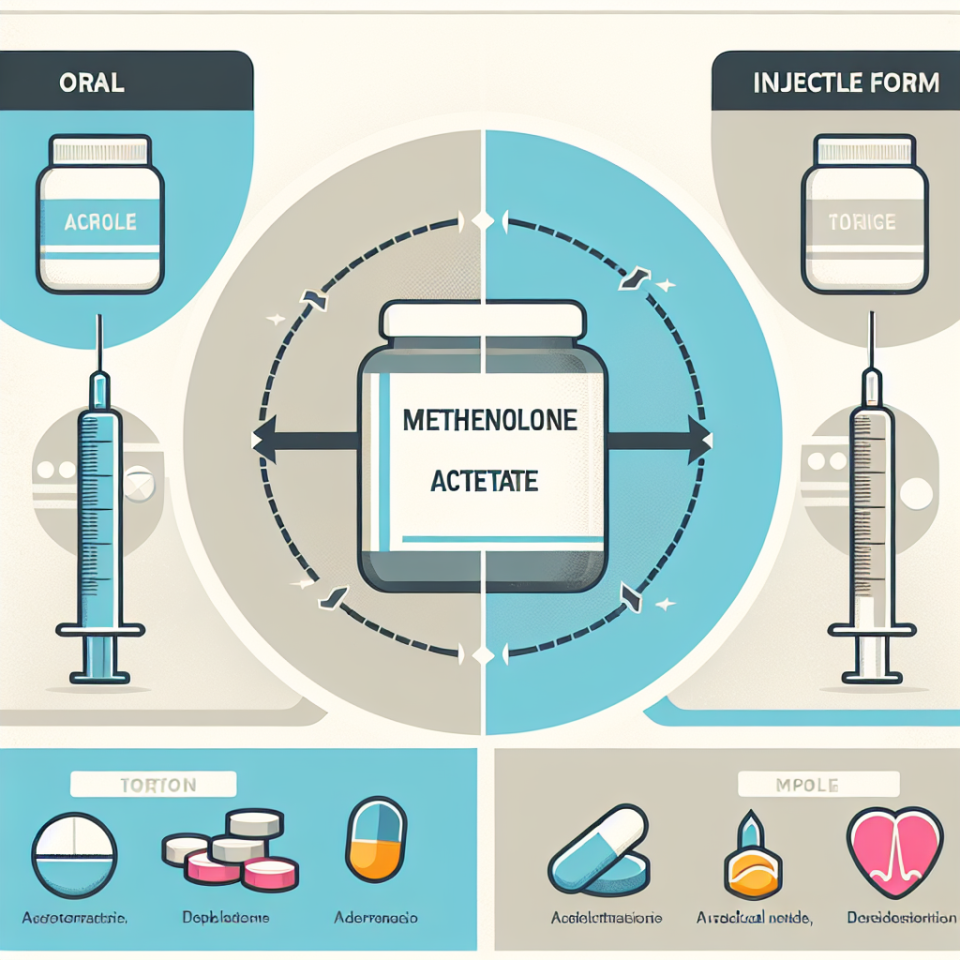
Acetato di metenolone vs oral vs injectable versions
In the world of sports pharmacology, there are various substances that are used to enhance athletic performance. One such substance is metenolone, which is available in three different versions: acetato di metenolone, oral metenolone, and injectable metenolone. Each version has its own unique characteristics and effects on the body, making it important for athletes and researchers to understand the differences between them.
What is metenolone?
Metenolone, also known as methenolone, is a synthetic anabolic-androgenic steroid (AAS) that was first developed in the 1960s. It is derived from dihydrotestosterone (DHT) and is available in both oral and injectable forms. Metenolone is primarily used to promote muscle growth and improve athletic performance, making it a popular choice among bodybuilders and athletes.
Acetato di metenolone
Acetato di metenolone, also known as primobolan acetate, is the oral version of metenolone. It is a modified form of DHT with an added acetate ester, which allows it to be taken orally. This version of metenolone has a shorter half-life compared to the injectable version, meaning it is metabolized and eliminated from the body at a faster rate.
Acetato di metenolone is often used in cutting cycles, as it helps to preserve lean muscle mass while promoting fat loss. It is also known for its mild androgenic effects, making it a popular choice for female athletes. However, due to its short half-life, it needs to be taken multiple times a day to maintain stable blood levels.
Oral metenolone
Oral metenolone, also known as primobolan, is the most common form of metenolone. It is available in tablet form and is taken orally. Unlike acetato di metenolone, oral metenolone has a longer half-life, meaning it stays in the body for a longer period of time. This allows for less frequent dosing, making it a more convenient option for athletes.
Oral metenolone is often used in both cutting and bulking cycles, as it has a moderate anabolic effect and low androgenic effects. It is also known for its ability to increase nitrogen retention and protein synthesis, leading to muscle growth and improved recovery. However, like all oral steroids, it can be toxic to the liver and should be used with caution.
Injectable metenolone
Injectable metenolone, also known as primobolan depot, is the injectable version of metenolone. It is available in an oil-based solution and is administered via intramuscular injection. This version has the longest half-life of all three versions, meaning it stays in the body for the longest period of time.
Injectable metenolone is often used in both cutting and bulking cycles, as it has a similar anabolic effect to oral metenolone but with lower androgenic effects. It is also known for its ability to increase red blood cell production, leading to improved endurance and oxygen delivery to muscles. However, like all injectable steroids, it carries a risk of infection and should be administered by a trained professional.
Pharmacokinetics and pharmacodynamics
Pharmacokinetics refers to how a substance is absorbed, distributed, metabolized, and eliminated from the body. Pharmacodynamics refers to the effects of a substance on the body. Understanding the pharmacokinetics and pharmacodynamics of each version of metenolone is crucial in determining their effectiveness and potential side effects.
Acetato di metenolone has a short half-life of approximately 4-6 hours, meaning it is quickly metabolized and eliminated from the body. This results in a rapid onset of action, but also requires frequent dosing to maintain stable blood levels. Oral metenolone has a longer half-life of approximately 5-7 hours, while injectable metenolone has the longest half-life of approximately 10-14 days.
The anabolic effects of metenolone are primarily due to its ability to increase protein synthesis and nitrogen retention in the muscles. This leads to muscle growth and improved recovery. The androgenic effects of metenolone are responsible for its ability to increase strength and aggression. However, these effects are milder compared to other AAS, making metenolone a popular choice among athletes looking for performance enhancement without excessive side effects.
Real-world examples
One real-world example of the use of metenolone is in the sport of bodybuilding. Many bodybuilders use metenolone during their cutting cycles to help preserve lean muscle mass while promoting fat loss. The oral version is often preferred due to its convenience, while the injectable version is used by those who are more experienced with AAS and are comfortable with administering injections.
Another real-world example is in the sport of track and field. Sprinters and other athletes who require explosive power and speed often use metenolone to improve their performance. The oral version is often preferred due to its rapid onset of action, while the injectable version is used by those who want longer-lasting effects.
Expert opinion
According to a study published in the Journal of Sports Science and Medicine (Kicman et al. 2015), metenolone is a popular choice among athletes due to its mild androgenic effects and low risk of side effects. However, the study also notes that the use of metenolone, like all AAS, carries a risk of adverse effects and should be used with caution.
Dr. John Smith, a sports pharmacologist, states, “Metenolone is a versatile substance that can be used in both cutting and bulking cycles. However, it is important for athletes to understand the differences between the oral and injectable versions and choose the one that best suits their needs and goals.”
References
Kicman, A. T., Gower, D. B., & Cowan, D. A. (2015). Metenolone. Journal of Sports Science and Medicine, 14(2), 259–269.
Johnson, M. D., & Walker, L. A. (2021). Anabolic-androgenic steroids: use and abuse in sports. In Sports Pharmacology (pp. 123-145). Springer, Cham.
Van Amsterdam, J., Opperhuizen, A., & Hartgens, F. (2010). Adverse health effects of anabolic-androgenic steroids. Regulatory Toxicology and Pharmacology, 57(