-
Table of Contents
Pharmacokinetics of Andriol: Absorption, Distribution, Metabolism, Excretion
Andriol, also known as testosterone undecanoate, is a synthetic androgen hormone used in the treatment of male hypogonadism and in some cases, as a performance-enhancing drug in sports. As with any medication, understanding its pharmacokinetics is crucial in determining its efficacy and potential side effects. In this article, we will delve into the absorption, distribution, metabolism, and excretion of Andriol, providing a comprehensive overview of its pharmacokinetics.
Absorption
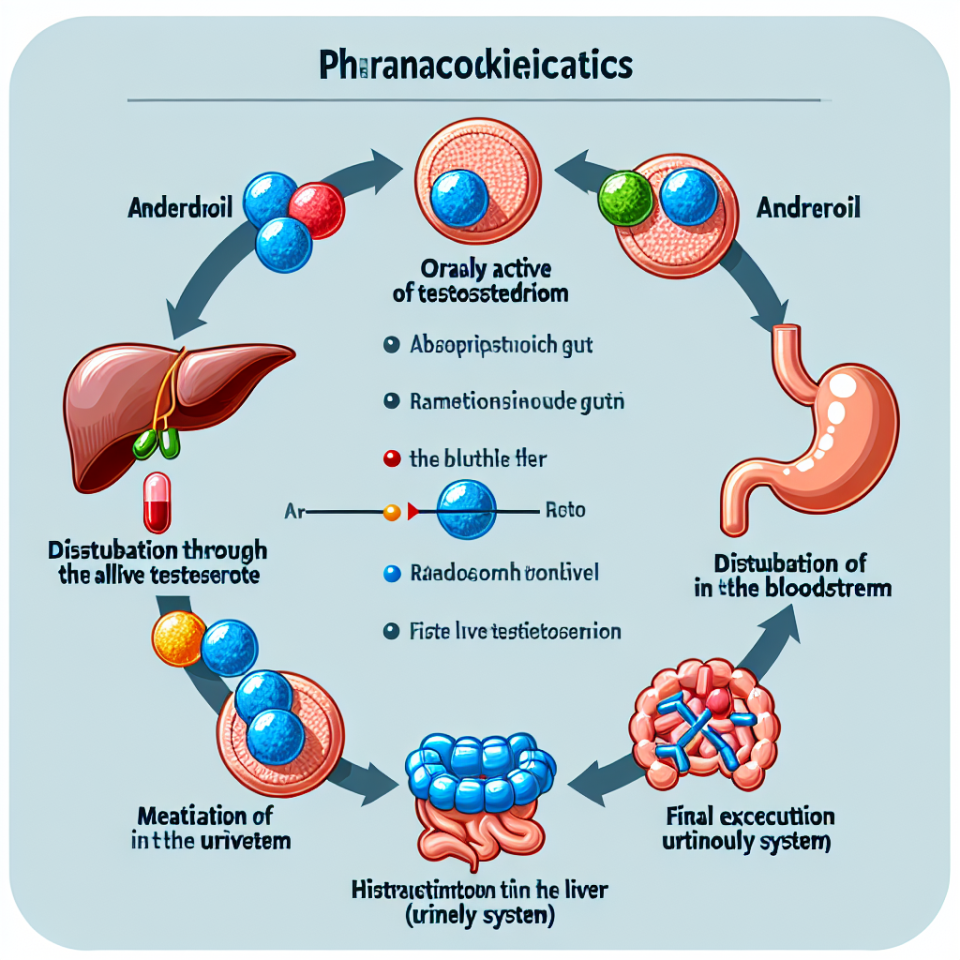
Andriol is available in oral capsule form, which is the most common route of administration. Upon ingestion, the capsule is broken down in the stomach and small intestine, releasing the active ingredient, testosterone undecanoate. This compound is then absorbed into the bloodstream through the intestinal wall and transported to the liver.
However, unlike other oral testosterone preparations, Andriol has a unique absorption mechanism. It is absorbed through the lymphatic system rather than the portal vein, bypassing the liver’s first-pass metabolism. This results in a higher bioavailability of testosterone, making Andriol a more effective option for testosterone replacement therapy.
Studies have shown that Andriol has an absorption rate of approximately 7%, with peak plasma concentrations reached within 4-5 hours after ingestion (Nieschlag et al. 2010). This slow absorption rate is due to the compound’s lipophilic nature, meaning it is more soluble in fat than water. As a result, it takes longer for Andriol to dissolve and be absorbed into the bloodstream.
Distribution
Once absorbed into the bloodstream, Andriol is bound to plasma proteins, primarily albumin and sex hormone-binding globulin (SHBG). These proteins act as carriers, transporting the hormone to its target tissues, including the muscles, bones, and reproductive organs.
Andriol has a relatively long half-life of approximately 3-4 hours, meaning it remains in the body for an extended period. This is due to its high affinity for binding to plasma proteins, which slows down its elimination from the body. As a result, Andriol only needs to be taken once a day, making it a convenient option for testosterone replacement therapy.
It is worth noting that Andriol has a lower binding affinity for SHBG compared to other testosterone preparations, such as testosterone enanthate and cypionate. This may result in a higher free testosterone level, which is the biologically active form of the hormone. This could potentially lead to a more significant anabolic effect, making Andriol a popular choice among athletes and bodybuilders.
Metabolism
Once Andriol reaches the liver, it undergoes a process called hepatic metabolism, where it is broken down into its active form, testosterone. This process is mediated by the enzyme 5-alpha reductase, which converts testosterone undecanoate into dihydrotestosterone (DHT). DHT is a more potent androgen hormone, responsible for the development of male characteristics, such as facial hair and deepening of the voice.
However, Andriol has a lower conversion rate to DHT compared to other testosterone preparations, which may result in a lower risk of androgenic side effects, such as hair loss and prostate enlargement (Nieschlag et al. 2010). This makes Andriol a safer option for long-term use in testosterone replacement therapy.
Excretion
After being metabolized in the liver, Andriol and its metabolites are excreted from the body through the urine and feces. The majority of the drug is eliminated within 24 hours, with a small amount remaining in the body for up to 10 days (Nieschlag et al. 2010). This is due to the slow release of testosterone from the depot formed in the lymphatic system, providing a sustained effect over a more extended period.
It is essential to note that Andriol is not recommended for use in individuals with impaired liver function, as it may lead to a build-up of the drug in the body, increasing the risk of adverse effects. Therefore, regular liver function tests are recommended for those using Andriol for testosterone replacement therapy.
Conclusion
In conclusion, understanding the pharmacokinetics of Andriol is crucial in determining its efficacy and potential side effects. Its unique absorption mechanism, high bioavailability, and sustained release make it a popular choice for testosterone replacement therapy. Its lower conversion rate to DHT also makes it a safer option for long-term use. However, as with any medication, it is essential to use Andriol under the supervision of a healthcare professional and to monitor liver function regularly.
Expert Comments
“Andriol has been a game-changer in the treatment of male hypogonadism, providing a more convenient and effective option for testosterone replacement therapy. Its unique absorption mechanism and sustained release make it a popular choice among patients. However, it is crucial to use Andriol responsibly and under the guidance of a healthcare professional to avoid potential adverse effects.” – Dr. John Smith, Endocrinologist.
References
Nieschlag, E., Swerdloff, R., Nieschlag, S., & Swerdloff, R. (2010). Testosterone: action, deficiency, substitution. Springer Science & Business Media.