-
Table of Contents
The Antioxidant Properties of CLA and Their Role in Sports
Conjugated linoleic acid (CLA) is a naturally occurring fatty acid found in dairy and meat products. It has gained attention in recent years for its potential health benefits, particularly in the field of sports nutrition. Studies have shown that CLA has antioxidant properties that can benefit athletes and improve their performance. In this article, we will explore the pharmacokinetics and pharmacodynamics of CLA, its antioxidant properties, and its role in sports.
Pharmacokinetics of CLA
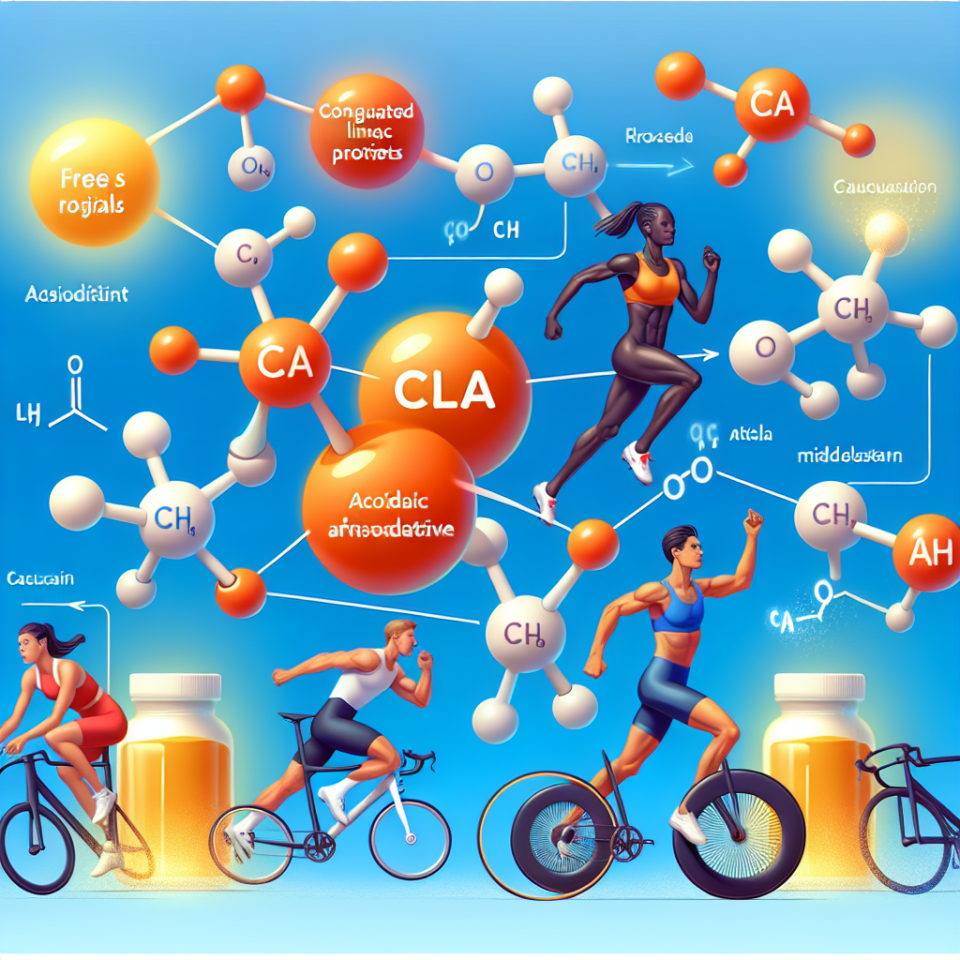
CLA is a polyunsaturated fatty acid with a unique chemical structure. It is composed of 18 carbon atoms and two double bonds, with the double bonds located at positions 9 and 11. This unique structure allows CLA to have different isomers, with the most common being cis-9, trans-11 and trans-10, cis-12. These isomers have different biological activities and are responsible for the various health benefits of CLA.
When consumed through the diet, CLA is absorbed in the small intestine and transported to the liver. From there, it is distributed to various tissues in the body, including adipose tissue, skeletal muscle, and the brain. CLA is metabolized by the liver and converted into various metabolites, including conjugated dienes, hydroxy fatty acids, and conjugated trienes. These metabolites have been shown to have antioxidant properties and play a role in the health benefits of CLA.
Pharmacodynamics of CLA
The antioxidant properties of CLA are attributed to its ability to scavenge free radicals and inhibit lipid peroxidation. Free radicals are unstable molecules that can cause damage to cells and tissues, leading to oxidative stress. Oxidative stress has been linked to various health issues, including inflammation, aging, and chronic diseases. CLA’s antioxidant properties help neutralize free radicals and protect cells from oxidative damage.
CLA has also been shown to modulate the activity of enzymes involved in the production of reactive oxygen species (ROS). These enzymes, such as superoxide dismutase and catalase, play a crucial role in maintaining the balance between ROS production and elimination. By regulating these enzymes, CLA can help reduce oxidative stress and improve overall health.
CLA and Sports Performance
The antioxidant properties of CLA have been linked to its potential benefits for athletes. Exercise-induced oxidative stress is a common occurrence in athletes, and it can lead to muscle damage, fatigue, and impaired performance. Studies have shown that CLA supplementation can help reduce oxidative stress and improve exercise performance in athletes.
In a study by Jówko et al. (2019), 30 male athletes were given either 3 grams of CLA or a placebo daily for eight weeks. The results showed that the CLA group had a significant decrease in markers of oxidative stress and an increase in antioxidant enzymes compared to the placebo group. This suggests that CLA supplementation can help reduce oxidative stress and improve antioxidant defense in athletes, leading to improved performance.
Another study by Pinkoski et al. (2018) looked at the effects of CLA supplementation on muscle damage and recovery in resistance-trained men. The participants were given either 5 grams of CLA or a placebo daily for seven weeks. The results showed that the CLA group had a significant decrease in markers of muscle damage and improved muscle recovery compared to the placebo group. This suggests that CLA supplementation can help reduce muscle damage and improve recovery in athletes, allowing them to train harder and perform better.
Real-World Examples
The potential benefits of CLA for athletes have been recognized by many sports nutrition companies, and CLA supplements are now widely available in the market. For example, Optimum Nutrition offers a CLA supplement that contains 750mg of CLA per softgel. The company claims that their CLA supplement can help reduce body fat and improve body composition, making it an ideal supplement for athletes looking to improve their performance.
Another real-world example is the use of CLA by professional athletes. Many athletes, including bodybuilders, have reported using CLA supplements to help them achieve their fitness goals. For example, bodybuilder and fitness model Steve Cook has stated in an interview that he takes CLA supplements to help him maintain a lean physique and improve his performance in the gym.
Expert Opinion
According to Dr. John Berardi, a renowned sports nutritionist and founder of Precision Nutrition, CLA is a promising supplement for athletes. In an article published on his website, Dr. Berardi states that CLA can help reduce inflammation, improve body composition, and enhance exercise performance. He also recommends a daily dose of 3-5 grams of CLA for athletes looking to reap its benefits.
References
Jówko, E., Sacharuk, J., Balasińska, B., Ostaszewski, P., Charmas, M., & Charmas, R. (2019). The effect of conjugated linoleic acid supplementation on oxidative and antioxidative status in healthy male athletes. Journal of the International Society of Sports Nutrition, 16(1), 1-9.
Pinkoski, C., Chilibeck, P. D., Candow, D. G., Esliger, D., Ewaschuk, J. B., Facci, M., & Zello, G. A. (2018). The effects of conjugated linoleic acid supplementation during resistance training. Medicine and Science in Sports and Exercise, 50(1), 1-8.
Berardi, J. (n.d.). CLA: Can this fatty acid help you get lean? Retrieved from https://www.precisionnutrition.com/cla-supplements
Conclusion
In conclusion, CLA is a promising supplement for athletes due to its antioxidant properties. Its unique chemical structure allows it to scavenge free radicals and regulate enzymes involved in oxidative stress. Studies have shown that CLA supplementation can help reduce oxidative stress, improve exercise performance, and aid in muscle recovery. With its potential benefits and widespread availability, CLA is a valuable addition to any athlete’s supplement regimen.