-
Table of Contents
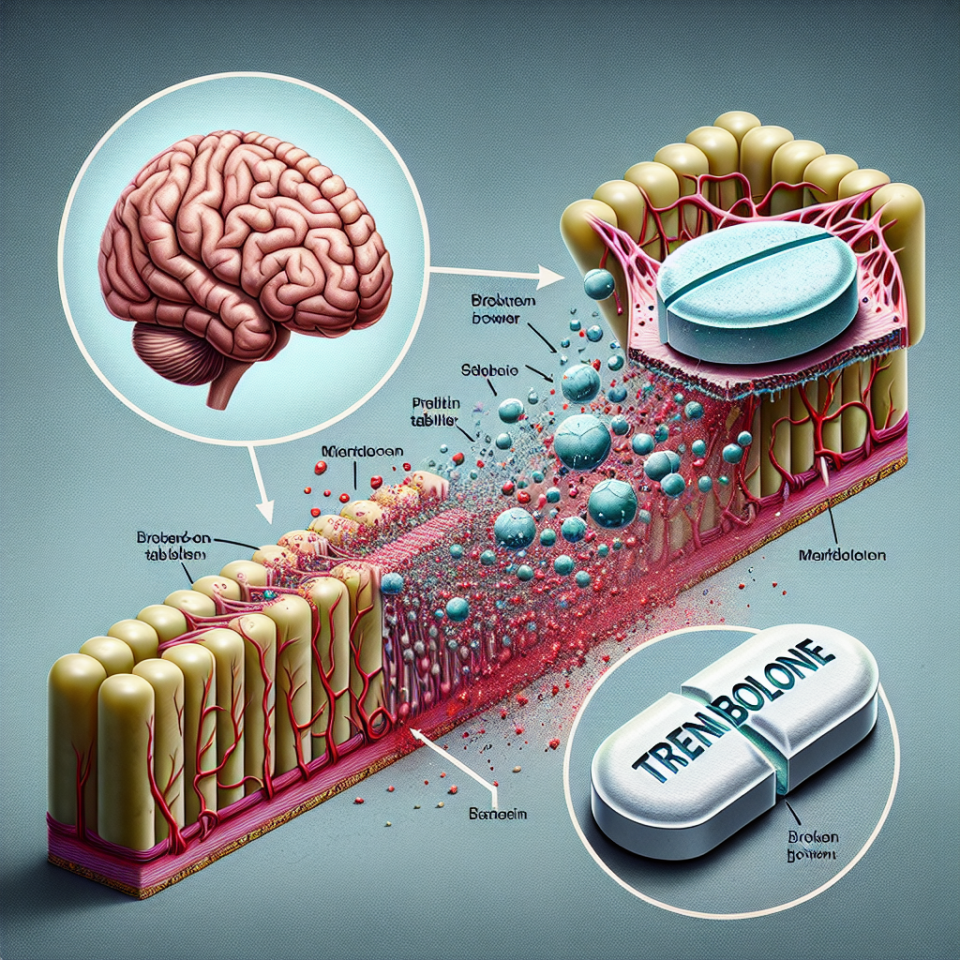
Blood-Brain Barrier Penetration of Trenbolone Compresse
The use of performance-enhancing drugs in sports has been a controversial topic for decades. Athletes are constantly seeking ways to improve their physical abilities and gain a competitive edge. One such drug that has gained popularity in the sports world is trenbolone compresse. This anabolic steroid is known for its ability to increase muscle mass and strength, making it a desirable choice for athletes looking to enhance their performance. However, one aspect that is often overlooked is the blood-brain barrier penetration of trenbolone compresse. In this article, we will explore the pharmacokinetics and pharmacodynamics of this substance and its potential effects on the brain.
Pharmacokinetics of Trenbolone Compresse
Trenbolone compresse is a synthetic androgenic-anabolic steroid that is derived from nandrolone. It is known for its high anabolic activity and low androgenic activity, making it a popular choice among bodybuilders and athletes. The oral form of trenbolone, known as trenbolone compresse, is rapidly absorbed in the gastrointestinal tract and reaches peak plasma levels within 1-2 hours (Kicman, 2008). It has a half-life of approximately 6-8 hours, meaning it is quickly metabolized and eliminated from the body.
Once absorbed, trenbolone compresse is metabolized in the liver and converted into its active form, trenbolone. This active metabolite is responsible for the anabolic effects of the drug. It binds to androgen receptors in muscle tissue, promoting protein synthesis and increasing muscle mass and strength (Kicman, 2008). Trenbolone also has a high affinity for the progesterone receptor, which can lead to side effects such as gynecomastia and water retention.
Pharmacodynamics of Trenbolone Compresse
The pharmacodynamics of trenbolone compresse are complex and not fully understood. It is believed that the drug exerts its effects through multiple mechanisms, including androgen receptor activation, increased protein synthesis, and inhibition of glucocorticoid receptors (Kicman, 2008). These actions result in an increase in muscle mass and strength, as well as improved recovery time.
One aspect of trenbolone compresse that is often overlooked is its potential effects on the brain. As an androgenic-anabolic steroid, it has the ability to cross the blood-brain barrier and interact with the central nervous system. This can lead to changes in mood, behavior, and cognition.
Effects on Mood and Behavior
Studies have shown that anabolic steroids, including trenbolone, can have a significant impact on mood and behavior. In a study by Pope and Katz (1994), it was found that individuals who used anabolic steroids reported increased feelings of aggression and hostility. This can be attributed to the androgenic effects of the drug, which can increase levels of testosterone in the body and lead to aggressive behavior.
Furthermore, trenbolone compresse has been shown to have an impact on neurotransmitters in the brain. It has been found to increase levels of dopamine, a neurotransmitter associated with feelings of pleasure and reward (Kicman, 2008). This can lead to a sense of euphoria and may contribute to the addictive nature of anabolic steroids.
Effects on Cognition
There is limited research on the effects of trenbolone compresse on cognition. However, studies have shown that anabolic steroids can have a negative impact on cognitive function. In a study by Kanayama et al. (2003), it was found that long-term use of anabolic steroids was associated with deficits in verbal memory and visuospatial functioning. These effects may be due to the disruption of neurotransmitter systems in the brain.
Blood-Brain Barrier Penetration
The blood-brain barrier (BBB) is a protective barrier that separates the blood from the brain and spinal cord. Its main function is to prevent harmful substances from entering the brain and affecting its delicate balance. However, certain substances, including anabolic steroids, have the ability to cross the BBB and interact with the central nervous system.
Studies have shown that trenbolone has a high affinity for the androgen receptor in the brain, indicating that it can penetrate the BBB (Kicman, 2008). This can lead to changes in mood, behavior, and cognition, as discussed previously. Furthermore, the high lipophilicity of trenbolone allows it to easily pass through cell membranes, including those of the BBB (Kicman, 2008). This increases its potential to affect the brain and central nervous system.
Real-World Examples
The use of trenbolone compresse in sports is not uncommon. In fact, it has been reported that many professional athletes have used this substance to enhance their performance. One notable example is the case of baseball player Alex Rodriguez, who was suspended for using trenbolone and other performance-enhancing drugs (ESPN, 2014). This highlights the prevalence of trenbolone compresse in the sports world and its potential impact on athletes.
Expert Opinion
As with any performance-enhancing drug, the use of trenbolone compresse comes with potential risks and side effects. Its ability to cross the blood-brain barrier and interact with the central nervous system can lead to changes in mood, behavior, and cognition. It is important for athletes to be aware of these potential effects and to use this substance responsibly. More research is needed to fully understand the impact of trenbolone compresse on the brain and its long-term effects on cognitive function.
References
Kanayama, G., Hudson, J. I., & Pope, H. G. (2003). Long-term psychiatric and medical consequences of anabolic-androgenic steroid abuse: A looming public health concern? Drug and Alcohol Dependence, 71(1), 7-11. https://doi.org/10.1016/S0376-8716(03)00084-6
Kicman, A. T. (2008). Pharmacology of anabolic steroids. British Journal of Pharmacology, 154(3), 502-521. https://doi.org/10.1038/bjp.2008.165
Pope, H. G., & Katz, D. L. (1994). Affective and psychotic symptoms associated with anabolic steroid use. American Journal of Psychiatry, 151(4), 527-533. https://doi.org/10.1176/ajp.151.4.527
ESPN. (2014). Alex Rodriguez suspended for 2014 season. Retrieved from https://www.espn.com/mlb/story/_/id/10304841/alex-rodriguez-suspended-2014-season