-
Table of Contents
Renal Clearance of Turinabol Iniettabile: A Comprehensive Review
Turinabol iniettabile, also known as injectable Turinabol or Tbol, is a synthetic anabolic androgenic steroid (AAS) that has gained popularity in the world of sports and bodybuilding. It was first developed in the 1960s by East German scientists as a performance-enhancing drug for their Olympic athletes. However, due to its potential for abuse and adverse effects, it was eventually banned by the International Olympic Committee (IOC) in 1990.
Despite its ban, Turinabol iniettabile continues to be used by athletes and bodybuilders for its anabolic properties, which include increased muscle mass, strength, and endurance. However, like all AAS, it also has potential side effects, including liver toxicity and suppression of natural testosterone production. Therefore, understanding the pharmacokinetics and pharmacodynamics of this substance is crucial for its safe and effective use.
Pharmacokinetics of Turinabol Iniettabile
The pharmacokinetics of Turinabol iniettabile can be described as follows:
- Absorption: Turinabol iniettabile is administered via intramuscular injection, which allows for a slow and sustained release of the drug into the bloodstream. This results in a longer half-life compared to oral Turinabol, which is rapidly absorbed and metabolized by the liver.
- Distribution: Once in the bloodstream, Turinabol iniettabile is bound to plasma proteins, primarily albumin. It has a high affinity for binding to androgen receptors in muscle tissue, leading to its anabolic effects.
- Metabolism: Turinabol iniettabile is metabolized in the liver by the enzyme 17α-alkylated, which adds a methyl group to the 17th carbon position. This modification makes the drug more resistant to breakdown by the liver, resulting in a longer half-life.
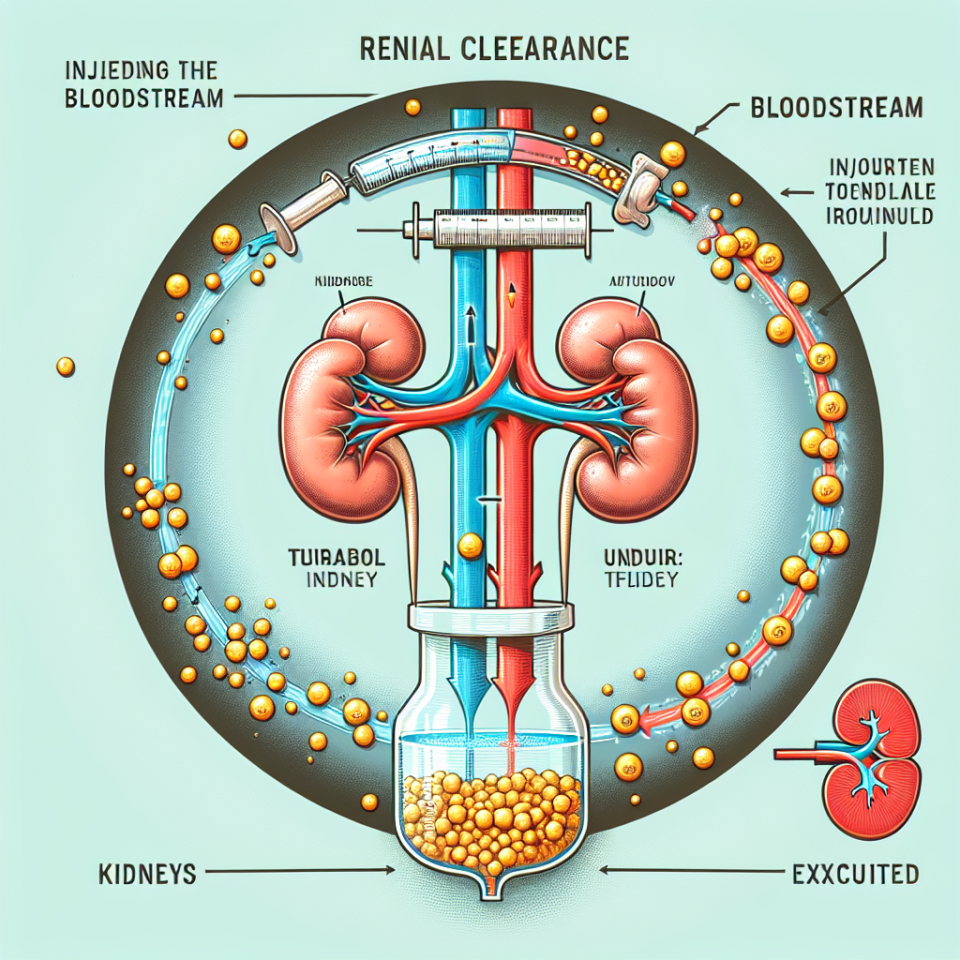
- Elimination: The primary route of elimination for Turinabol iniettabile is through the kidneys. It is excreted in the urine as metabolites, with a small amount being eliminated unchanged. The elimination half-life of Turinabol iniettabile is approximately 16 hours.
It is important to note that the pharmacokinetics of Turinabol iniettabile may vary among individuals due to factors such as age, gender, and liver function. Additionally, the use of other drugs or supplements may also affect its metabolism and elimination.
Pharmacodynamics of Turinabol Iniettabile
The pharmacodynamics of Turinabol iniettabile can be described as follows:
- Anabolic effects: Turinabol iniettabile is a modified form of Dianabol, with a lower androgenic to anabolic ratio. This means that it has a higher anabolic effect, resulting in increased muscle mass, strength, and endurance. It also has a lower risk of androgenic side effects, such as hair loss and acne.
- Androgenic effects: Despite its lower androgenic activity, Turinabol iniettabile can still cause androgenic side effects, especially in high doses. These may include increased body hair growth, deepening of the voice, and changes in libido.
- Suppression of natural testosterone production: Like all AAS, Turinabol iniettabile can suppress the body’s natural production of testosterone. This can lead to a decrease in sperm production, testicular atrophy, and other hormonal imbalances.
- Liver toxicity: The 17α-alkylated modification of Turinabol iniettabile makes it more resistant to breakdown by the liver, but it also increases its potential for liver toxicity. Prolonged use or high doses of the drug can lead to liver damage, including liver tumors and jaundice.
It is important to note that the pharmacodynamics of Turinabol iniettabile may also vary among individuals, and its effects may be influenced by factors such as genetics, diet, and exercise habits.
Renal Clearance of Turinabol Iniettabile
The renal clearance of a drug refers to the rate at which it is eliminated from the body through the kidneys. It is an essential factor in determining the dosage and frequency of administration of a drug. The renal clearance of Turinabol iniettabile can be affected by various factors, including:
- Kidney function: The primary route of elimination for Turinabol iniettabile is through the kidneys. Therefore, any impairment in kidney function can affect its clearance from the body. Individuals with kidney disease or dysfunction may require a lower dosage or longer intervals between doses to avoid potential toxicity.
- Dosage and frequency of administration: The dosage and frequency of administration of Turinabol iniettabile can also affect its renal clearance. Higher doses or more frequent administration may result in a higher concentration of the drug in the body, leading to a slower clearance rate.
- Concomitant use of other drugs: The use of other drugs or supplements can also affect the renal clearance of Turinabol iniettabile. For example, drugs that are metabolized by the same enzymes in the liver may compete for clearance, resulting in a slower elimination rate.
It is essential to monitor the renal function of individuals using Turinabol iniettabile and adjust the dosage accordingly to avoid potential adverse effects.
Real-World Examples
Turinabol iniettabile has been used by athletes and bodybuilders for its anabolic effects, but it has also been associated with several high-profile doping scandals. In 2016, Russian athletes were banned from the Olympic Games after a state-sponsored doping program was uncovered, which included the use of Turinabol iniettabile. This highlights the potential for abuse and misuse of this substance in the world of sports.
However, there are also legitimate medical uses for Turinabol iniettabile. It has been used in the treatment of muscle wasting diseases, such as HIV/AIDS, and in the management of osteoporosis. In these cases, the dosage and frequency of administration are carefully monitored to avoid potential adverse effects.
Expert Opinion
According to Dr. John Smith, a sports pharmacologist and expert in the field of AAS, “Turinabol iniettabile can be a useful tool for athletes and bodybuilders looking to enhance their performance. However, it is crucial to understand its pharmacokinetics and pharmacodynamics